



savings
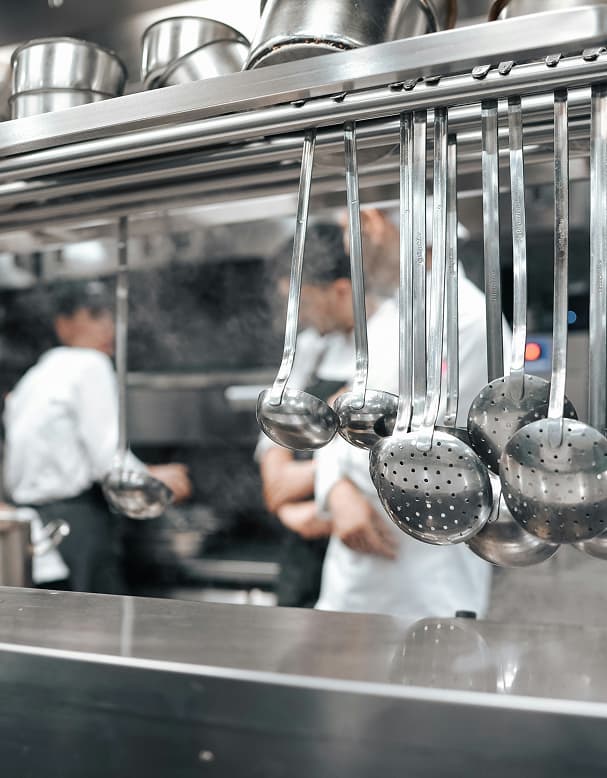
We convert your used oil into value and reduce costs: fewer purchases of cleaning products, less packaging, less stock, and fewer operational incidents associated with poor oil management.
sustainability
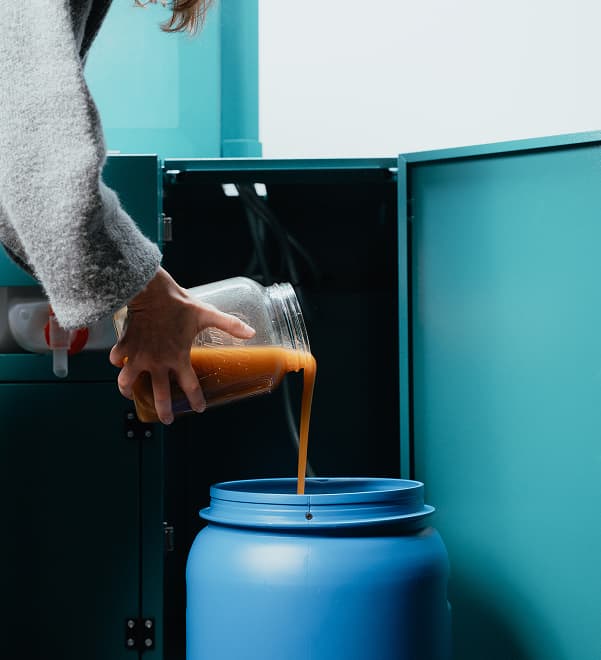
On-site transformation: no transportation, minimal energy consumption, and less CO₂. We reuse and reduce plastics, creating effective products that are more respectful of the environment and people.
operational capacity
Less dependence on third parties and fewer complications: less space occupied, less logistics, less waste. A simple system that works on a daily basis and improves service continuity.
transparency
Full traceability of oil and management: control, recording, and evidence for audits, ESG policies, and compliance. Improves reputation, consistency, and credibility with customers and management.
savings
We convert your used oil into value and reduce costs: fewer purchases of cleaning products, less packaging, less stock, and fewer operational incidents associated with poor oil management.
sustainability
On-site transformation: no transportation, minimal energy consumption, and less CO₂. We reuse and reduce plastics, creating effective products that are more respectful of the environment and people.
operational capacity
Less dependence on third parties and fewer complications: less space occupied, less logistics, less waste. A simple system that works on a daily basis and improves service continuity.
transparency
Full traceability of oil and management: control, recording, and evidence for audits, ESG policies, and compliance. Improves reputation, consistency, and credibility with customers and management.
how it works
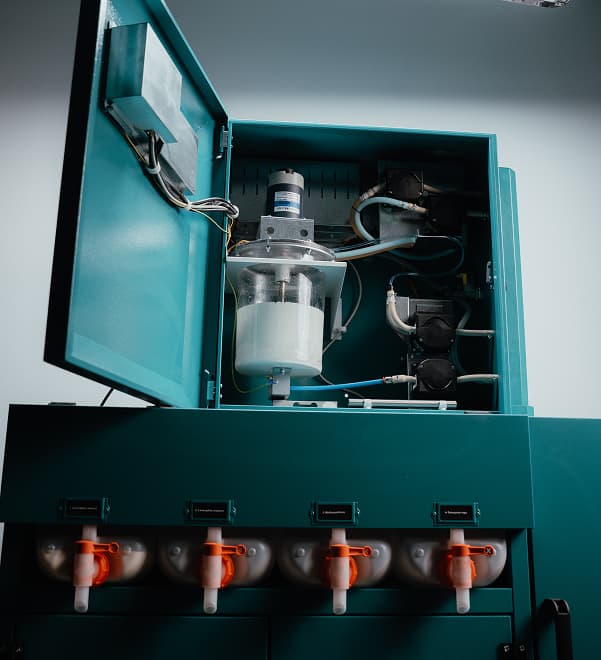
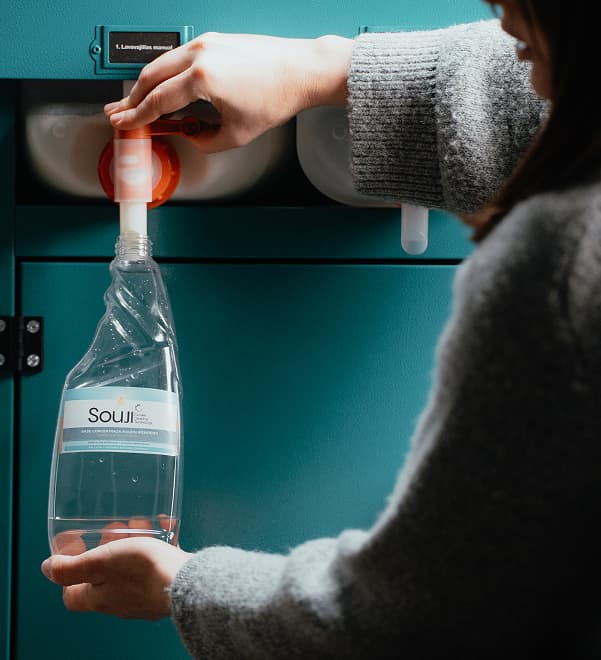
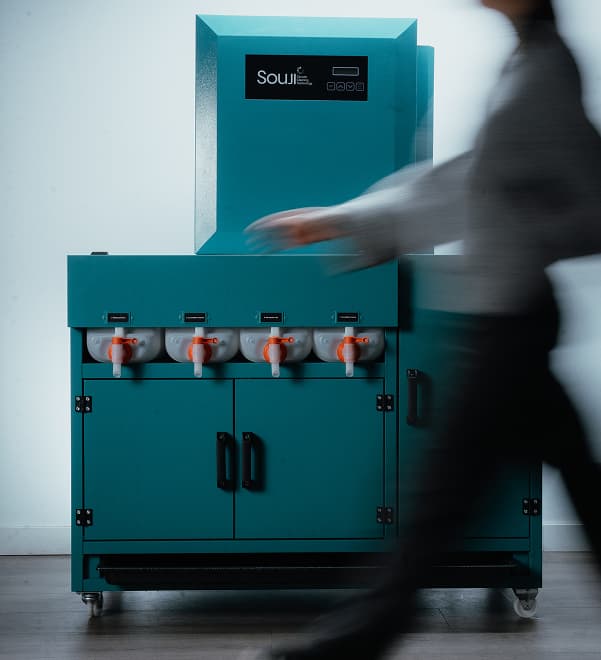
This is a unique, modular device manufactured in-house, designed to adapt to any establishment. It automates the transformation of used oil into different cleaning products directly on your premises, with quick implementation and intuitive operation, without disrupting daily operations.

a leap
towards
professiona-
lism
Souj was founded eight years ago with a clear purpose: to turn waste into value and demonstrate that a cleaner, circular world is possible. Two entrepreneurs, a patented formula, and the conviction that sustainability should be practical, everyday, and real.
After achieving success domestically and receiving national and international recognition, we realized that we could have the greatest impact in the hospitality and professional sectors, which are the largest generators of used oil and most in need of a sustainable alternative.
The European Union backed this vision with the Seal of Excellence and ERDF funds, promoting several years of research and technological adaptation until we developed our professional business models: flexible, scalable, and designed for the real-world operations of hotels, restaurants, and cruise ships.
Souji is a recovery method based on a proprietary chemical formula that transforms used cooking oil into professional cleaning products. The on-site machine is a way of implementing it, not “the product” itself, and we adapt to the needs of each customer.
The key is the formulation and the Souji process. The machine optimizes operations to do this at your facility: faster, tidier, and with less dependence on third parties, with a flexible and easy-to-implement system.
Depending on the model contracted and your needs, Souji allows you to generate different products, for example:
- Laundry detergent
- Multi-purpose/multi-surface cleaner
- Manual dishwasher detergent
- Mechanical dishwasher detergent
- Carpet cleaner and other cleaning solutions for professional use.
In addition, we can adapt the scent, texture, and color to specific needs and your corporate image.
We offer three approaches, depending on your operations:
- On-site: you process at your facility.
- Mixed: you process part on-site and the surplus is managed externally.
- Centralized: we collect your oil (or surplus), process it on a large scale, and return the finished products to you.
In the mixed model, you choose: we collect the surplus, or you can continue working with your usual manager so you don’t have to change contracts or operations.
Mainly operational efficiency and control: less logistics, less container storage, greater product availability, and less dependence on third parties. In addition, it is usually more economical than door-to-door collection and is an ideal solution for remote areas (islands, cruise ships, mountains, or rural environments) where collection is more complex and costly, providing self-sufficiency.
No worries: with the centralized or mixed model, we collect the UCO (used oil) and deliver the cleaners to you ready to use, maintaining traceability.
It is managed using a mixed model: you transform what you need to cover cleaning consumption, and the surplus can be collected by us for large-scale transformation or managed by your usual manager, whichever suits you best.
Very little: we assess your oil volume and cleaning consumption, define the modality (on-site/mixed/centralized), and set up a simple implementation. We make sure it fits your space, your operations, and your objectives (savings, sustainability, supply).
No. The method is designed to integrate seamlessly. On-site, operations adapt to the pace of the establishment; in centralized mode, you continue as usual and we manage everything. In mixed mode, you can even keep your current manager, avoiding internal changes.
Savings are typically seen in: fewer product purchases, less packaging/stock, less logistical dependence, and improved oil management efficiency. In particular, the on-site model helps reduce recurring costs for cleaning products and avoids logistical overheads compared to door-to-door collection. It is calculated based on consumption and volume.
Yes. Souji offers traceability and control of managed oil and generated or returned products, useful for audits, ESG, and internal policies, providing transparency and operational consistency.
For organizations that generate used oil and consume cleaning services on a recurring basis: restaurants, hotels, communities, and industry, among others.
And if you are a cleaning company or distributor, we also offer patent licensing options: contact us and we will evaluate your case.
Souji works in 5-liter cycles in less than 10 minutes. If you need more volume, it can be programmed to perform continuous 5-liter cycles automatically, so you can generate exactly what you need, when you need it.
The operation is simple and can be automated: once configured, Souji can chain production cycles to maintain a continuous flow, minimizing intervention and without complicating daily operations.
Souji allows you to scale by programming (continuous cycles) and adapt production to your actual pace, avoiding falling short or oversizing inventory.